
What Are the Most Important Questions to Ask About US Prison Conditions?
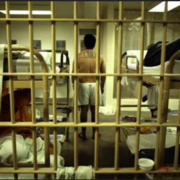
In the United States, numerous standards have been developed for the operation of correctional facilities. States and the federal government have constitutional protections. Professional bodies like the American Correctional Association and the American Jail Association offer accreditation. Courts have weighed in repeatedly. And yet most people who have spent time inside a correctional facility as an inmate, a worker, or a researcher know that the gap between those standards and actual conditions is often great, and sometimes unconscionable.
The question is not whether American prison conditions are bad, but why we keep failing to fix them. Three obstacles explain the impasse: little to no independent measurement, no meaningful enforcement, and no political incentive to care. These failures are sustained, in part, because we ask the wrong questions, and when we ask the right ones, we ask them of the wrong people. Five questions, in particular, about prison conditions deserve more attention.
Who is collecting the information, and who controls it?
Most data on prison conditions comes from the institutions being evaluated (i.e., state corrections departments, the Federal Bureau of Prisons, and facility administrators). This is a structural problem. Similar to the problems encountered with COMPSTAT (the relatively recent data-driven police accountability and crime tracking system) when the entity responsible for conditions is also the one measuring them, the reliability of that data can be questioned. We would not accept this logic in any other domain of public accountability. Thus, we shouldn’t accept it here.
Whose voices are being included and whose are being excluded?
Scholarly research and consulting reports have their place, but they are not sufficient. The people with the most direct and detailed knowledge of prison conditions are typically the inmates themselves, their families, and the correctional officers who work alongside them daily. These voices are frequently underrepresented in official assessments. Gathering these constituencies’ opinions should be done in a serious manner, and not simply be a cute add-on. This information can and should be collected in a rigorous manner, through structured interviews, surveys, and independent review processes that protect participants from retaliation.
Is the problem systemic or localized?
When conditions at a specific correctional facility come to light through litigation, a death, or a news media investigation, administrators and state departments of corrections frequently treat it as an isolated case. Sometimes it is. More often, it reflects long-term patterns that exist across a correctional system. Without consistent, comparable, and meaningful data collected at the facility level and aggregated at the state and federal levels, we have no reliable way to distinguish between the two. This matters enormously for how we respond.
What happens when findings are ignored?
Standards mean nothing without enforcement. Accreditation processes, legislative oversight, and court orders have all produced findings that were subsequently minimized, delayed, or ignored. The question of what accountability actually looks like is one that the field has never answered adequately.
What would an early warning system look like?
We have dashboards for economic indicators, public health metrics, and infrastructure conditions. We do not have anything comparable for the state of American correctional facilities. A well-designed monitoring system that tracks overcrowding, rates of violence, healthcare access, staffing levels, correctional officer integrity, sanitation, temperature, and the availability of rehabilitation programming across facilities would allow problems to be identified before they become crises. It would also make it considerably harder to ignore them.
These questions are not simply academic or those posed by prison activists. They have direct consequences for the 1.9 million people currently incarcerated in the United States, for the correctional workers who work in deteriorating and dangerous conditions, and for the communities to which the vast majority of incarcerated people will eventually return. Poorly funded, poorly monitored facilities do not simply punish the people inside them. They pose serious public safety concerns to everyone outside them.
The argument that prisoners deserve poor conditions because they committed crimes is both morally bankrupt and empirically counterproductive. People who leave prison without skills, without adequate healthcare, and without having been treated with basic human dignity are more likely to return. That’s not a liberal talking point. It is the consensus of the research literature.
We currently spend more on immigration detention than on the basic conditions of the facilities where sentenced prisoners serve their time. That tells us something about our priorities. It should prompt us to ask whether those priorities reflect evidence, or simply the political convenience of a public that would rather not think about what happens behind prison walls.
Photo credit
Title: Clinton Correctional Facility, in Dannemora, New York (2007).
Photographer: Xamreb