 Creative Commons
Preventing peaceful protests from being hijacked by people engaging in violence
We’ve seen the peaceful protests, the looters, the police use of excessive force, and now the vigilantes.
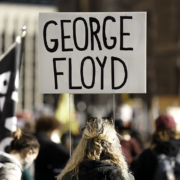
For peaceful protestors, the majority of those out in the streets exercising their first amendment rights, this moment in American history cannot be overlooked. It’s pivotal. We care about living in cities and a country where African-American citizens are killed by police officers under questionable circumstances, a criminal justice system that is slow to investigate and prosecute these incidents, and racial, social and economic inequality that is too deeply rooted in the fabric of our country.
For looters their decision to engage in violence and arson is also born out of long held frustration with police, the criminal justice system and a society where racism is pervasive and never ending. Looting can also be motivated by the benefit of anonymity, opportunism, and getting caught up in the moment. But some people came to the protests (in cities such as Minneapolis, Portland, and Washington, D.C, to name a few) with the primary purpose of committing or encouraging violence: smashing windows, throwing items at police, and physically confronting police officers. Others with questionable motives drove cars and trucks into protestors. Some of these individuals were undoubtedly agent provocateurs (e.g., umbrella man in Minneapolis, ex-seal in Portland placing pipe bombs, etc.). In some cases the violence prone and looters were quickly identified by peaceful protestors, chased or handed over to the police. The presence of these individuals escalated the already tense situations and cast a negative light on the peaceful protests.
To this mix, enter armed right-wing militia. This is a dangerous but not unexpected development. The presence of vigilantes throughout American history is not something new, but under the Trump presidency (especially because of his appeals and rhetoric), and the power of news media outlets such as Fox News, controversial political commentators such as Rush Limbaugh and Alex Jones, QAnon, and social media, these individuals are organizing like never before. The recent killing of two men and the injuring of a third who were simply exercising their first amendment rights to peaceful protest and free speech, in Kenosha, by 17 year old pro-Trump Kyle Rittenhouse, is a case in point.
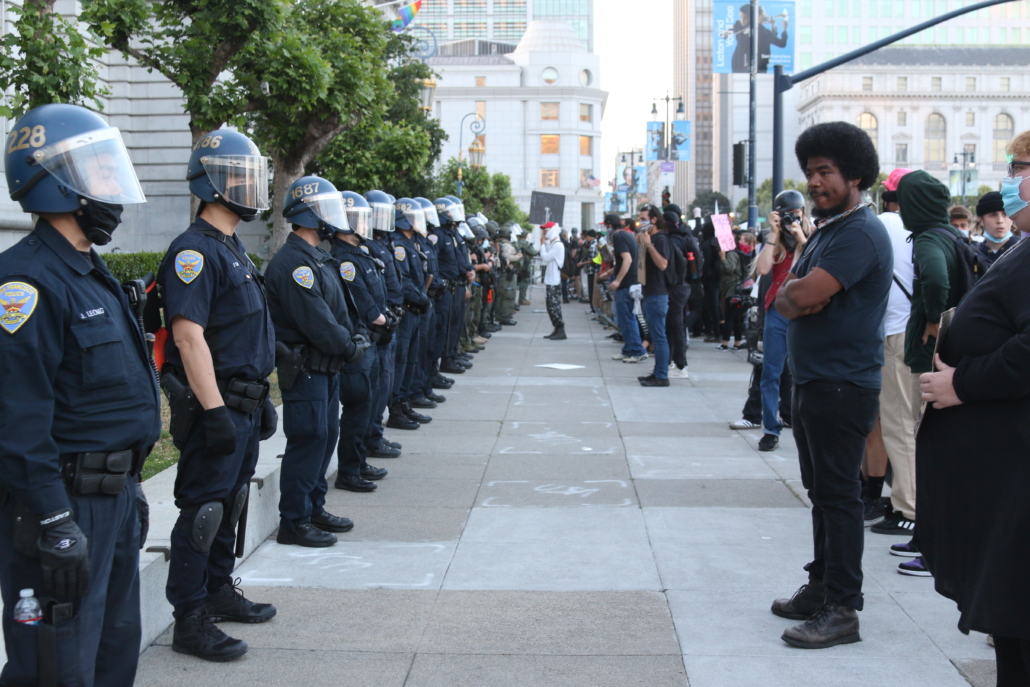
Peaceful protestors, organizers and law enforcement must guard against looters, agent provocateurs, right wing militia, and officers in their ranks who engage or encourage property destruction and violence. We need to be careful that peaceful protests don’t get hijacked by looters or right wing militia. Peaceful protestors need to continue to document via smart phones what they see, and upload this information to social media as soon as possible. Organizers of street protests need to establish rational plans to deal with looters and vigilantes.
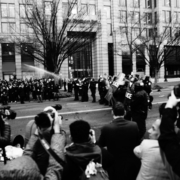
As unpalatable at it may sound, peaceful protesters are probably going to require formal co-operation with law enforcement. These efforts should be formally documented in case there are later disagreements. It also means that law enforcement, from senior administrators down to the officers manning the barricades, must do their job to uphold and protect the right to peaceful protest and condemn the looters and vigilantes’ actions. Law enforcement must be appropriately trained in how to protect people in protests, including attending accredited riot control training, learning de-escalation techniques, and reminding them that they are there to serve and protect, not bash heads and ask questions later.
Law enforcement must send clear signals to their rank and file not to engage in violence, to protect the first amendment rights of the protestors, and be on the lookout for agent provocateurs, looters, and right-wing militia who will use these events as opportunities to flex their muscles. If rank and file do not follow these policies and practices they should be appropriately sanctioned and not simply given a slap on the wrist. And if governors send out the national guard, then they must sure that the individuals who are in their ranks follow the same protocols.
If these steps are not taken seriously and immediately, the outcomes will be a message translated to the American public that all protesters are violent, and this will only play into the hands of Trump, his enablers and supporters.