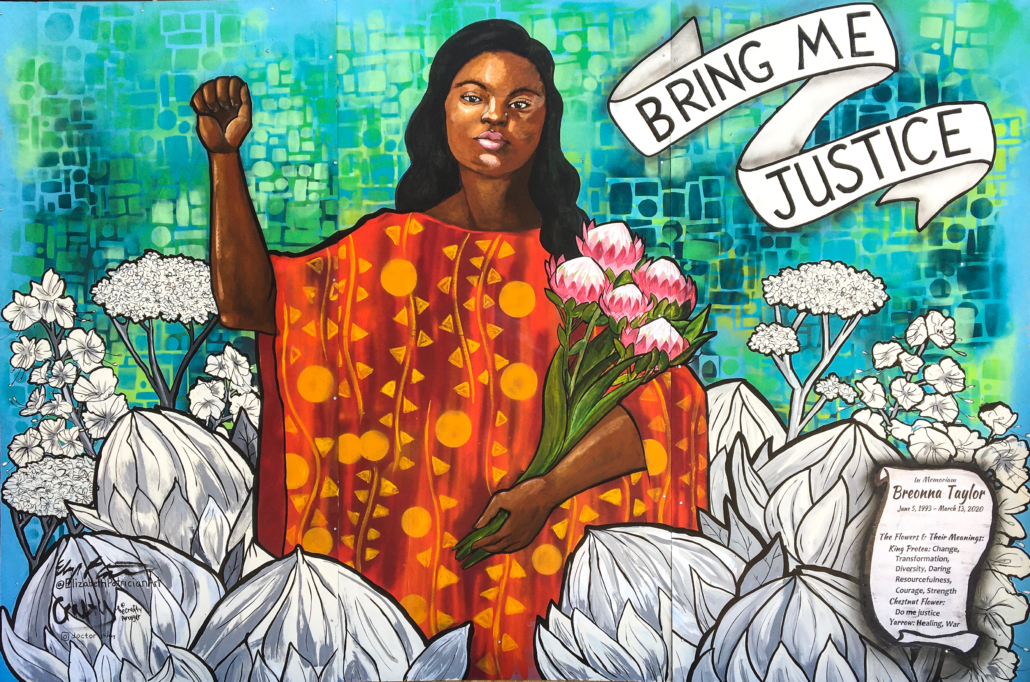
Delaying Justice in the investigation and charges in connection with the murder of Breonna Taylor
One of the American Criminal Justice system’s most cherished legal norms is the assumption that serious crime, like murder, will be thoroughly investigated and, regardless of the victim or alleged suspect/s, judiciously prosecuted and punished. That is to say, in theory.
But when police are accused of the law breaking, how do we ensure impartiality and minimize conflict of interest in the investigation and charging process? To this end, there are a number of safeguards at our disposal. The case can be taken over by a neighboring jurisdiction, by a law enforcement agency in a different part of the state, or even by a different state entirely. The state attorney general’s office can also do its own investigation, as can the Federal Bureau of Investigation (upon request) and especially if there is a possibility that the crime was one that is federal in nature.
A lack of expediency in situations where law enforcement are themselves the perpetrator causes the public to lose confidence not only in the police department, but the criminal justice system and the state as a whole. This situation has unfortunately become all too common in recent times.
We have seen this process play out with increasing regularity through a litany of cases of police use of excessive force: Eric Garner in New York City, Michael Brown in Ferguson, George Floyd in Minneapolis, and most recently with Breonna Taylor in Louisville.
In brief, right after midnight on March 13, 2020 (almost six months ago), three plainclothes Louisville Metro Police Department (LMPD) officers executed a no knock warrant on Taylor’s apartment. The Louisville PD initially claimed that officers identified themselves as police before entry; Kenneth Walker, Taylor’s boyfriend and neighbors dispute this. Suspecting a break-in, (a plausible scenario in that part of town) Walker, opened fired once on the officers. The officers returned fire with 20 shots shooting both Walker, and killing Taylor.
It’s important to note that the warrant was neither for Walker nor Taylor. It was for Jamarcus Glover who was incidentally in custody, but the police did not know this at the time.
Other unsettling things to note in the context of this tragic incident: Taylor was not initially killed by the gunfire, she bled out after approximately 20 minutes, and officers neither attempted to save her nor call paramedics. Taylor’s mother was given a bureaucratic run around by the LMPD and not informed that her daughter had been killed for hours after the LMPD knew.
And the initial incident report indicated that Taylor did not have any injuries.
On May 20, 2020 the report of an investigation by the Louisville Police Department was handed over to State Attorney General Daniel Cameron. Three months have passed, daily protests have occurred, multiple protesters have been arrested, and still no charges against the officers have been laid. In June the Steve Conrad, LMPD chief of police under intense criticism resigned.
By any standard, the optics for this case are not great. Neither the state nor local prosecutors have filed charges against any of the officers, and the judge who signed off on the warrant has not been sanctioned. Meanwhile we have had two bills in congress one titled the Justice in Policing Act sponsored by the Democrats that has included a provision that police cannot use no knock raids, and another sponsored by Kentucky senator Rand Paul titled Justice for Breonna Taylor Act. Both have stalled.
Still no charges have been laid. It’s possible that the gears will turn and Taylor’s murder will find justice.
At the very least this incident is sloppy police work and judicial malfeasance, at its worst a state crime, a crime of the powerful.
In the meantime, for Taylor’s mother and loved ones, and the people who have come out to protest her killing, justice continues to be delayed, and that means justice is denied.