How American prison conditions can impact extradition requests
The United States is known around the world for lots of great things. Often referred to as the land of opportunity, America is blessed with spectacular wilderness areas replete with natural beauty, well-respected educational and medical institutions, generally friendly people, and Disneyland .
But all that glitters is not gold. The US is also recognized for its high rates of gun violence, (supported in part by the second amendment), homelessness, income inequality, intolerance, racism, etc.
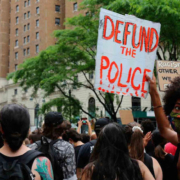
Part of this latter package includes one of the highest incarceration rates in the world and prison conditions, that are often abysmal (including overcrowded, understaffed and dangerous correctional facilities).
Not only is this reality known among the average foreigner, but the judiciaries of those countries from whence they come.
That’s why many foreign criminal justice and political systems are reluctant to extradite citizens of all countries, irrespective of how hideous the crimes they are alleged to have committed, who are wanted by the United States government (and regardless if they are in custody or not).
Although the judiciaries of foreign countries may distain America’s mass incarceration per sea, or the disproportionate number of African American’s and people of low income behind bars, they fear not only that the accused person whose docket they are presiding over is not going to get a fair trial, or may receive the death penalty, but they generally know that US prison conditions and the provision of services inside fall below generally accepted standards of human rights.
They are well aware of numerous reports developed by well-respected experts and organizations documenting the mistreatment and in some cases abuse of prisoners in US correctional facilities, not to mention inhumane and degrading treatment behind bars.
Many foreign countries (particularly Western and/or advanced industrialized countries) have better standards for their correctional facilities. Most European countries, in particular, are signatories to the European Convention on Human rights which bars inhumane or degrading treatment of prisoners. If they believe that prison conditions in the United States fall below these standards they may be reluctant to extradite an individual to America.
One of the most salient of those aspects is the quality of care incarcerated people might receive, particularly if they suffer from a serious medical condition or psychological challenges (e.g., Asperger’s syndrome, autism, acute depression, etc.).
This is not just hyperbole. Repeatedly we have seen this in action. Four salient cases are illustrative.
In 2012, Gary McKinnon, a British Citizen, residing in the UK, was wanted by the United States government for hacking into the Pentagon computer system. If convicted, McKinnon, a long time sufferer of Asperger’s would be required to spend a considerable amount of time in isolation, most likely at a Supermax Prison. This condition, it was argued may prompt him to commit suicide. Thus his extradition request was denied.
In 2018, the Irish High Court denied the extradition of Eric Marques, who was charged with running a dark web child pornography website. The court cited concerns about the conditions of confinement in the United States, including the use of special administrative measures (SAMs), which can involve prolonged solitary confinement, as well as the lack of mental health facilities and the high rate of violence in U.S. prisons.
Also in 2018, British citizen, Laurie Love won an appeal against a US extradition request. Love was accused by the United States of perpetrating a series of cyber-attacks against American government agencies, including the Federal Reserve, NASA, and the Army. Love (a long time sufferer of Autism) and his attorneys argued among other things that his mental and physical health would be at risk due to the harsh conditions in American prisons.
And in 2021, WikiLeaks co-founder Julian Assange, who was wanted in the United States on charges of espionage and hacking government computers, and facing extradition, was prevented from being extradited because of his precarious mental health, that that his lawyers argued would deteriorate in American correctional facilities where he would be held for trail and possibly sentenced to.
Fighting an extradition request is not a slam dunk for individuals who have fled the United States and have been arrested in a foreign country, nor for foreigners wanted by the United States government, their defense council and loved ones. The process typically involves multiple court appearances, the involvement of one or more skilled legal teams, and expert witnesses that can testify not only to the wanted person’s medical and physical conditions, and psychological challenges, but also (depending on the particular charge) an intimate knowledge of local, state and federal correctional facility systems and practices, not to mention transportation practices.
The challenges of the American correctional system that tolerates poor jail and prison conditions and practices are not going to be fixed any time soon. But the reluctance of foreign governments to send individuals who are wanted back to the United States because of poor jail and prison conditions, should serve as an additional reason why the American correctional system should reform and change sooner rather than later.
Photo Credit: Alpha Photo
Extradition
A photo about the topic Extradition.