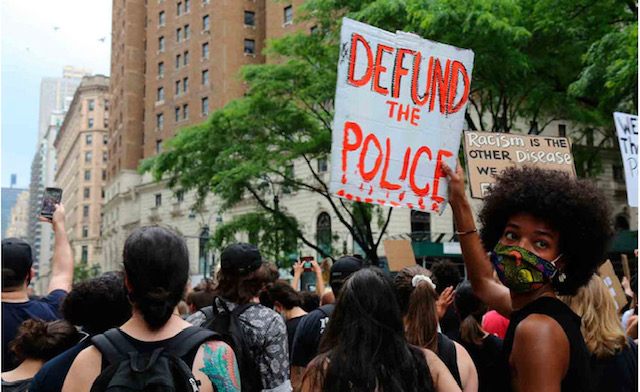
Eliminating or reducing police violence by abolishing or defunding the police?
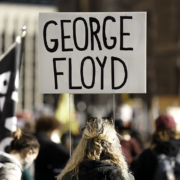
It was predictable. With the sheer number of people across America in the streets, protesting the killing of Minneapolis resident George Floyd by white police officers, many officers would respond with violence.
Over the past week, we have experienced or witnessed firsthand or via social media a lot of uncalled for and unprovoked police use of force and excessive force (i.e., choke holds, knee pinnings, tear gas, use of police vehicles to move people, rubber bullets, etc.) as a response to peaceful protestors.
As someone who has studied police use of force, this practice has deep-roots in the history of our country, and despite the gradual delimitation of situations in which force can be legally applied (e.g., the use of force continuum), the practice has largely remained intact due in part to the legal system (e.g., qualified immunity), the power of police unions, and other powerful social institutions. One of the most dominant themes in the history of American policing have been calls for change and the necessity of reform. But changing the police has been an uphill battle; few wins, and lots of backsliding.
At the same time as the Democratic party attempts to pass police reform legislation through Congress, two relatively radical proposals have recently garnered attention via the protests, news, and social media: abolishing/dismantling the police and defunding the police. Although these calls are gaining some support, they are also predictably encountering push back from conservative politicians and pundits, and police unions because these constituencies feel that their power is being challenged, fear of groups who are advocating these positions, and the alternatives have yet to be clearly specified. There’s also the perception that we can’t just get rid of the police because if we do who will protect and keep us safe from criminals, and other dark elements in our society?
Radical or not, efforts are underway in Minneapolis to “dismantle” the police department and create a new mechanism to provide public safety to the residents of that city. And in New York City, Mayor Bill De Blasio, heavily criticized in the wake of police actions surrounding the recent protests, announced late Sunday night he plans to decrease funding to the NYPD.
These recent developments beg the question, is abolition really a utopian idea? Not entirely. For example, Quakers, and a large constituency in the academic field of criminology and criminal justice, who have been advocating for the abolition of prisons for a very long time. In addition to forming the International Conference on Penal Abolition, holding biannual meetings, regular panels at learned conferences, and a burgeoning amount of scholarship, their greatest success has been in raising awareness of the costliness of prisons both financially, but also in terms of the human toll they exact on those who are incarcerated, their loved ones, and the rest of society. When we consider dismantling the police we are forced to consider other possible mechanisms that may achieve the same goals as we entrust to police departments.
An intermediate position is the reallocation of police budgets. Most Americans are shocked at the ridiculously large sums we spend on our police and the percentage they consume in our municipal and county budgets. For example, the NYPD alone spends 6 billion dollars a year.
How does this happen? Every year chiefs and commissioners of police, armed with fancy PowerPoint presentations, stand in front of city hall and/or county executives and make their case why they deserve more money. As a matter of organizational survival this makes sense. And, few elected politicians want to appear weak on crime (remember Willie Horton), so they capitulate and almost rubber stamp these inflated police budgets. Likewise police unions and accrediting bodies have pushed police departments and the governmental bodies that they are beholden to increase their budgets to alarming levels.
Assuming that budgets will largely remain intact, we need to insure that police budgets are spent on the kinds of things communities (not just the police) want it spent on (i.e., reallocation) such as improved police training, better police community relations, police accountability measures, police athletic league programs (similar to the one that operated Baltimore example), etc. But in the proportions that citizens want.
The alternative option is defunding. Defunding the police makes budgetary sense. Since the 1960s we have asked our policy makers and legislators to cut back the ridiculous amounts we spend on the military. As a response we have public (aka governmental) watch dog agencies that monitor government agency spending, to keep it in check.
There are plenty of ideas floating around regarding what to do with the surplus of police budgets or with their proposed budget increases. We can channel the remaining money into programs and professionals (e.g., social workers, public school teachers, etc.) that better help the community in various ways. For example, why call a police officer when a homeless person seems to be disruptive? A better professional might be a social worker who’s trained to deal with this population.