Jeffrey Ian Ross
  • Blog
  • Publications
    • by Type
      • My Books
      • Articles
      • Chapters
      • Recommended Books
    • by Subject
  • Expert Witness
  • Consulting
  • Speaking
  • Media
  • Bio
    • Vitae
    • Teaching
  • Contact
  • Menu Menu

How do democracies slip into authoritarianism?

February 25, 2024/by Jeffrey Ian Ross

The prospect of a second Trump term, the current composition of the supreme court, and the rise of the MAGA movement, has prompted not just elected and stalwart democrats and political commentators, but former leaders and members of the Republican Party to suggest that the United States risks the possibility of becoming an authoritarian state.

Barring technical distinctions among similar political processes or systems like autocracy, despotism, dictatorship,  fascism, oligarchy, and tyranny the phenomenon of democratic countries becoming authoritarian states is real and has historical precedents.

This includes, but is not limited, to European countries like Germany, Italy, and Spain, as well as Latin American states such as Argentina, Chile, Ecuador, and Uruguay, not to mention Turkey and Iran.

Undoubtedly, some democracies are more susceptible than others to slipping into authoritarianism. Scholars have identified several major causes of the turn toward authoritarianism. Some of these factors originate externally, while others internally, or both. The former can include external threats, such as countries that threaten or actually invade democratic countries.  The latter can be the result of weakened democratic institutions like the judiciary, rule of law, and the constitution. Meanwhile unresolved internal crises such as political corruption, inflation, income, racial or ethnic inequality, unemployment, and even guerrilla warfare and terrorism can contribute to the rise of authoritarianism. Additionally, an apathetic, distracted, docile, uneducated public, one that is willing to settle for so-called quick fix solutions to the countries’ challenges can exacerbate these vulnerabilities.

It’s important to recognize that certain causes carry more weight in specific contexts. Moreover, as observers and participants of politics, we often fall into the trap of believing that one political ideology, party, or leader is inherently better at preserving democracy. However, history teaches us otherwise.

Many entities with ostensibly prosocial agendas have devolved into personalist crusades, ultimately paving the way for authoritarian regimes. More specifically, democratically elected leaders, too numerous to list, when faced with crises such as accusations of corruption or the fear of external invasion, may exploit these situations to consolidate power.

Building on the simple idea elaborated by Sinclair Lewis, we must remain vigilant and resist the temptation to believe that “it can’t happen here.” Complacency is the enemy of democracy, and safeguarding it requires constant vigilance, education, critical thinking, and active involvement from citizens.

In conclusion, understanding the factors that contribute to the erosion of democracy and protecting those that uphold democratic principles and processes is crucial for preventing the descent into authoritarianism. By addressing weaknesses in our democratic systems, engaging in informed discourse, and remaining vigilant against threats, we can strive to uphold the principles of democracy and ensure that the phrase “it can’t happen here” remains nothing more than a fallacy of hindsight.

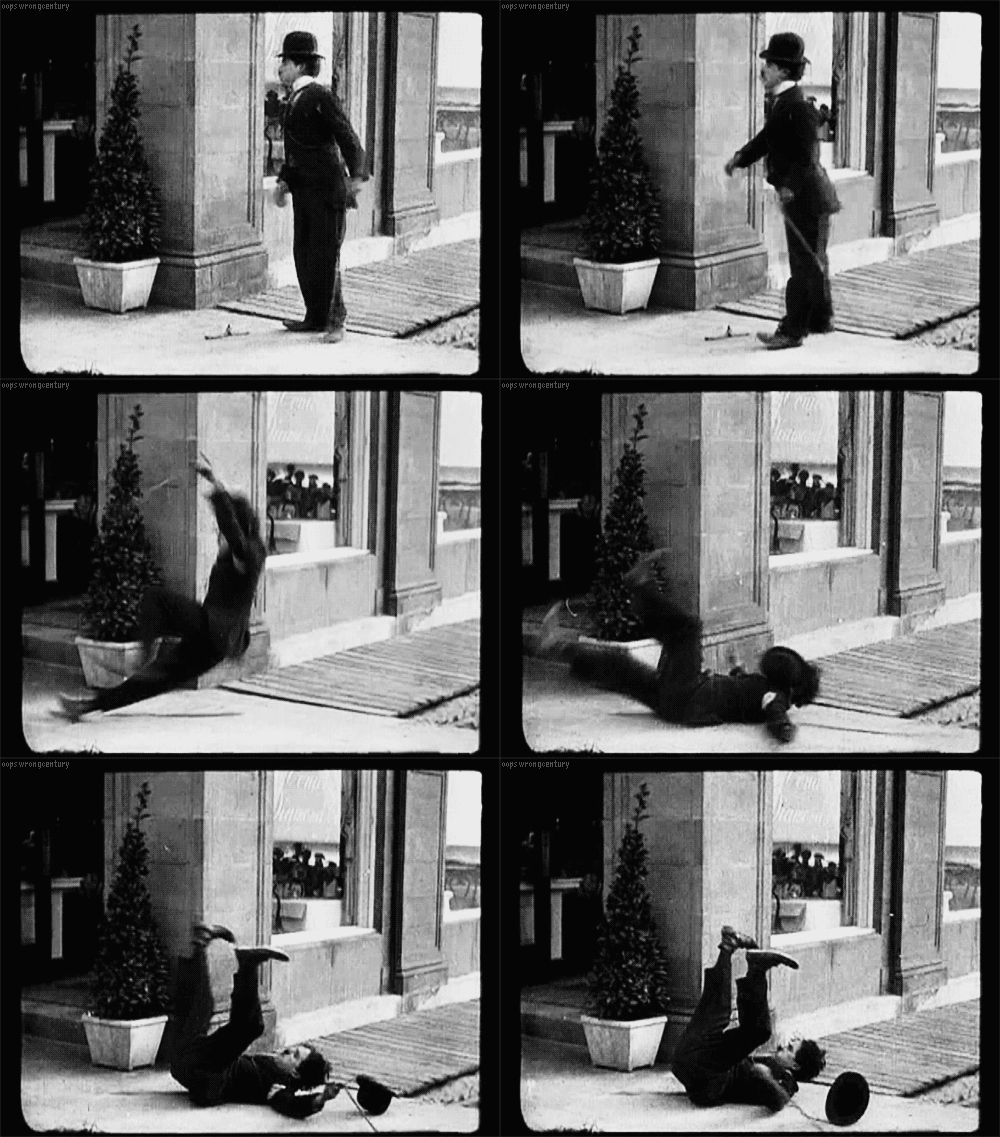
Photo credit

Charlie Chaplin from the movie “The Gold Rush”

 

Share this entry
  • Share on Facebook
  • Share on X
  • Share on LinkedIn
  • Share on Reddit
  • Share by Mail
  • Link to Instagram
https://jeffreyianross.com/wp-content/uploads/29fdeda7f511bcbd5b706be9c2ca7d19-2.gif 379 500 Jeffrey Ian Ross https://jeffreyianross.com/wp-content/uploads/jeffrey-ian-ross-logo-04.png Jeffrey Ian Ross2024-02-25 02:56:172024-09-22 12:19:35How do democracies slip into authoritarianism?
You might also like
How about a memorial to the people who died, were injured, and victimized in the January 6th insurrection?
What are the “Hot” Research Topics and Questions in Criminology/Criminal Justice?
Most complaints about unpaid academic labor ignore context
Why is the Committee to investigate the January 6th attack holding televised hearings now?
The Death of Democracy in America Is Boring
Progressives need to be more critical of Assange
@ Tony Webster Time to remove offensive memorials, monuments, and statues
Why are people and organizations unable or unwilling to use experts?

Most Popular Posts

  1. What’s in a name? Ex-convicts, formerly incarcerated or returning citizen?
  2. My beef with Person Centered Language
  3. Exploring how graffiti and street art calls attention to social justice issues
  4. A police union’s endorsement of Trump is not a happy one
  5. Should You Earn a PhD in Criminology/Criminal Justice or an Allied Field?

See all 10 →

Tags

Activism (44)
American Indians / Alaska Natives & First Nations Peoples (3)
Authenticity (24)
Books (20)
Clothing (9)
Colleges & Universities (40)
Convict Criminology (11)
Cooking & Cuisine (16)
Corrections (34)
COVID-19 (21)
Crime (28)
Crimes of the Powerful (60)
Criminal Justice (86)
Criminology (38)
Elections (14)
Expertise & Mastery (109)
Food (21)
Graffiti & Street Art (48)
Inequality (38)
Japanese Cooking & Cuisine (11)
Language (12)
Leaders (15)
Lived Experience (8)
Memories (10)
Movies & Television Series (6)
Music & Musicians (15)
Police/Policing (39)
Political Crime (21)
Political Participation (47)
Power (65)
Prisons (28)
Protest (17)
Public Space (71)
Race & Ethnicity (22)
Scholarly Disciplines (31)
Scholarship (70)
Semiotics (15)
Sound & Noise (5)
Strategy/Strategic Planning (14)
Street Culture (53)
Street Ethnography (8)
Tourism & Vacation (1)
Travel (1)
Travel, Tourism & Vacation (17)
University Pedagogy (39)
Urban Mobility (10)
Urban Public Space (75)
Vacation (20)
Year End Review (6)

X Logo Linkedin Facebook Instagram

© 2026 Jeffrey Ian Ross

Link to: Gas stations and random acts of urban incivility Link to: Gas stations and random acts of urban incivility Gas stations and random acts of urban incivility Link to: Are most academic departments, schools, and colleges of Criminology or Criminal Justice cop shops? Link to: Are most academic departments, schools, and colleges of Criminology or Criminal Justice cop shops? Are most academic departments, schools, and colleges of Criminology or Criminal...
Scroll to top Scroll to top Scroll to top