
Street Culture, Book by Book
Search Amazon using the term street culture, and you’ll find countless books about gangs, graffiti, street art, policing, homelessness, drug markets, skateboarding, street fashion, or urban crime, but relatively few that explicitly examine street culture as an overarching concept.
Why is that?
Part of the reason is that researchers tend to study one aspect of street culture rather than the broader phenomenon.
Another is that street culture has primarily been explored in journal articles rather than book-length studies.
Finally, many authors have produced classic works on street culture without ever using the term itself. Instead, they write about “street life,” “urban subculture,” or, in Britain, “road culture.”
As a result, identifying the most important books on street culture requires looking beyond titles and labels to the substance of the scholarship.
The books below are the ones that do it best
Street Corner Society (1943), byWilliam Foote Whyte
I would begin with Whyte’s Street Corner Society. Although he never used the term street culture, his street ethnography remains one of the foundational studies of urban street life. Based on participant observation in Boston’s Italian-American “Cornerville,” Whyte demonstrated that what outsiders often dismissed as social disorder was actually a highly organized system of informal relationships, leadership, reciprocity, and neighborhood life. By today’s standards, it is difficult not to view this as one of the earliest studies of street culture.
Tally’s Corner: A Study of Negro Streetcorner Men (1967), by Elliot Liebow
Liebow’s Tally’s Corner shifted attention to the everyday lives of unemployed Black men in Washington, D.C. Rather than portraying his subjects as pathological or culturally deficient, Liebow showed how street-corner life represented a rational adaptation to unstable employment, poverty, and limited opportunities.
In Search of Respect: Selling Crack in El Barrio (1995), by Philippe Bourgois
Bourgois’ ethnography of East Harlem is one of the first major books to place the concept of street culture at the center of its analysis. Bourgois argues that street culture emerges among marginalized residents as an adaptive response to exclusion from the mainstream economy and institutions. Rather than romanticizing or condemning the crack economy, he explores how structural inequality shapes identity, work, masculinity, family life, and survival.
Code of the Street (1999), byElijah Anderson
Building on ideas first introduced in his previous book StreetWise (1990), Anderson’s Code of the Street has become one of the most influential theories in urban sociology and criminology/criminal justice. Anderson argues that many disadvantaged neighborhoods develop an informal code governing respect, reputation, and the use of violence. The book transformed the discussion of street culture by identifying the moral rules that regulate social interaction under conditions of concentrated disadvantage.
Sidewalk (1999), by Mitchell Duneier
Duneier’s Sidewalk broadened the study of street culture beyond violence and gangs. Through years of participant observation among book vendors, panhandlers, and scavengers in New York City’s Greenwich Village, Duneier demonstrated that the marginalized people he studied create their own informal social order and often contribute positively to the functioning of public space. His work demonstrates that street culture encompasses far more than crime.
Street Culture in Chengdu (2003), by Di Wang
This book offers a very different perspective by examining street culture historically rather than ethnographically. Drawing on archival and historical sources, Wang demonstrates that street culture is not simply a contemporary phenomenon associated with crime or youth, but a historically connected to urban public life. His work also reminds us that street culture is not exclusively a Western phenomenon.
Street Capital: Black Cannabis Dealers in a White Welfare State (2009), by Sveinung Sandberg and Willy Pedersen
This study introduced the influential concept of street capital. Drawing on Pierre Bourdieu’s theory of capital, the researchers argue that individuals involved in street life accumulate forms of knowledge, reputation, toughness, and social connections that possess value within street settings, even if those same resources have little value in mainstream society. Their work significantly advanced the theoretical understanding of status and identity in street culture.
Understanding Street Culture: Poverty, Crime, Youth and Cool (2015), by Jonathan Ilan
Ilan’s Understanding Street Culture is the first book-length theoretical synthesis devoted specifically to street culture itself rather than to a single neighborhood, city, or group. Ilan draws together scholarship from Britain, North America, and elsewhere to argue that street culture is a global phenomenon shaped by social exclusion, identity, style, consumption, and “cool,” treating cool not as surface style but as a source of status and identity for young people otherwise shut out of mainstream markers of success.
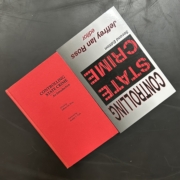
Routledge Handbook of Street Culture (2021), by Jeffrey Ian Ross
My own edited volume differs from the earlier books because it is not an ethnography of one place or one population. Instead, it is interdisciplinary in the sense that it brings together scholars from criminology, sociology, anthropology, geography, history, architecture, and cultural studies to examine street culture from multiple perspectives. The goal was to define and critique the field more clearly and to demonstrate that street culture extends well beyond crime, gangs, graffiti and street art, and violence to include language, economies, music, fashion, skateboarding, homelessness, policing, and other important aspects of urban life.
Looking Back
Taken together, these books illustrate how scholarship on street culture has evolved over the past eighty years. Early ethnographers documented how people organized everyday life on street corners and in neighborhoods. Later researchers explained the norms, identities, and forms of capital that shape street worlds, while more recent work has broadened the concept to include public space, historical development, informal economies, and global comparative perspectives.
Despite this progress, scholarship on street culture remains limited. Early work suffered from a kind of tunnel vision, focusing disproportionately on urban street crime and subcultures rather than the fuller range of everyday street life. The field also sits at the intersection of criminology, sociology, anthropology, geography, urban studies, and history. This interdisciplinary character is both its greatest strength and possibly one of the reasons it has developed relatively slowly. No single discipline has claimed ownership of the concept.
The limitation holds geographically too. But work on street culture outside North America and Britain is already emerging, and I hope it continues, broadening the study of street culture beyond the Western world and exploring how street cultures emerge, evolve, and differ across cities and societies globally.
Photo Credit:
Photographer: Danny Lyon
Title: Three boys + A Train graffiti, Brooklyn 1974