Jeffrey Ian Ross
  • Blog
  • Publications
    • by Type
      • My Books
      • Articles
      • Chapters
      • Recommended Books
    • by Subject
  • Expert Witness
  • Consulting
  • Speaking
  • Media
  • Bio
    • Vitae
    • Teaching
  • Contact
  • Menu Menu

Parking as a Microcosm of Broader Urban Struggles

September 14, 2025/by Jeffrey Ian Ross

Parking, often treated as a mundane logistical concern, is an important site of contestation in urban life. At its core, it reflects the struggle over public space in cities, where demand routinely exceeds supply.

Although debates about cars usually focus on externalities like emissions or their dominance over other modes of urban mobility, vehicles need to be stored, and drivers who use their vehicles in a city expect space to be available. Yet such spaces are typically scarce and therefore valuable. Municipalities attempt to impose order (and generate revenue) through ordinances, signage, enforcement, and fines, which reflect broader priorities about whose mobility matters.

Parking regulation, then, is more than bureaucratic management; it is an exercise of state power that structures everyday mobility and privileges certain users (e.g., residents, commuters, or commercial actors) over others in certain spaces, during particular times.

But urban order does not flow only from law. Informal norms shape behavior: whether a departing driver “owes” a space to someone waiting, how long it is acceptable to double-park, or whether putting a chair in a snow-cleared space is legitimate. Such practices reveal how everyday interactions generate micro-negotiations (and aggressions) of entitlement and authority. They demonstrate that order is continually produced and contested at the street level, not simply imposed from above.

Conflicts over towing, double-parking, or “space-saving” further highlight how residents and drivers attempt to assert claims over scarce resources, sometimes in defiance of official rules. These disputes expose tensions between formal regulation and lived practice, linking the politics of parking to broader questions of urban justice, governance, and the “right to the city.” The questions over who gets access to public space, what types of space, under what conditions, and under what terms are dominant in this exercise.

Ultimately, parking is not a mundane logistical issue but a microcosm of broader urban struggles over the distribution of rights, the allocation of resources, and the contestation of urban space itself.

Photo credit:

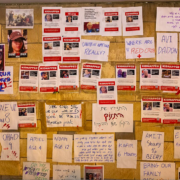
Title: Improptu Parking Sign Washington, D.C.

Photographer: Jeffrey Ian Ross, Ph.D.

Share this entry
  • Share on Facebook
  • Share on X
  • Share on LinkedIn
  • Share on Reddit
  • Share by Mail
  • Link to Instagram
https://jeffreyianross.com/wp-content/uploads/IMG_5130-scaled.jpg 1920 2560 Jeffrey Ian Ross https://jeffreyianross.com/wp-content/uploads/jeffrey-ian-ross-logo-04.png Jeffrey Ian Ross2025-09-14 12:22:062025-09-14 12:43:38Parking as a Microcosm of Broader Urban Struggles
You might also like
The Plague of Motorized Scooters in our large Cities?
What are the “Hot” Research Topics and Questions in Criminology/Criminal Justice?
When street art provokes moral outrage?
Bars with Character and Characters
Graffiti, Street Art & Dockless Mobility
Helping formerly incarcerated people get into respectable graduate programs in Criminology/Criminal Justice
The Unravelling of American Democracy?
Making sense of graffiti and street art in local, state, and national parks

Most Popular Posts

  1. What’s in a name? Ex-convicts, formerly incarcerated or returning citizen?
  2. My beef with Person Centered Language
  3. Exploring how graffiti and street art calls attention to social justice issues
  4. A police union’s endorsement of Trump is not a happy one
  5. Should You Earn a PhD in Criminology/Criminal Justice or an Allied Field?

See all 10 →

Tags

Activism (44)
American Indians / Alaska Natives & First Nations Peoples (3)
Authenticity (24)
Books (20)
Clothing (10)
Colleges & Universities (40)
Convict Criminology (11)
Cooking & Cuisine (16)
Corrections (34)
COVID-19 (21)
Crime (28)
Crimes of the Powerful (60)
Criminal Justice (86)
Criminology (38)
Elections (14)
Expertise & Mastery (109)
Food (21)
Graffiti & Street Art (48)
Inequality (38)
Japanese Cooking & Cuisine (11)
Language (12)
Leaders (15)
Lived Experience (8)
Memories (11)
Movies & Television Series (6)
Music & Musicians (15)
Police/Policing (39)
Political Crime (21)
Political Participation (47)
Power (65)
Prisons (28)
Protest (17)
Public Space (71)
Race & Ethnicity (22)
Scholarly Disciplines (31)
Scholarship (70)
Semiotics (16)
Sound & Noise (5)
Strategy/Strategic Planning (14)
Street Culture (53)
Street Ethnography (8)
Tourism & Vacation (1)
Travel (1)
Travel, Tourism & Vacation (17)
University Pedagogy (39)
Urban Mobility (10)
Urban Public Space (75)
Vacation (20)
Year End Review (6)

X Logo Linkedin Facebook Instagram

© 2026 Jeffrey Ian Ross

Link to: Rethinking the Subway Sandwich Guy Incident Link to: Rethinking the Subway Sandwich Guy Incident Rethinking the Subway Sandwich Guy Incident Link to: What’s the Role of Belonging in Urban Environments? Link to: What’s the Role of Belonging in Urban Environments? What’s the Role of Belonging in Urban Environments?
Scroll to top Scroll to top Scroll to top