
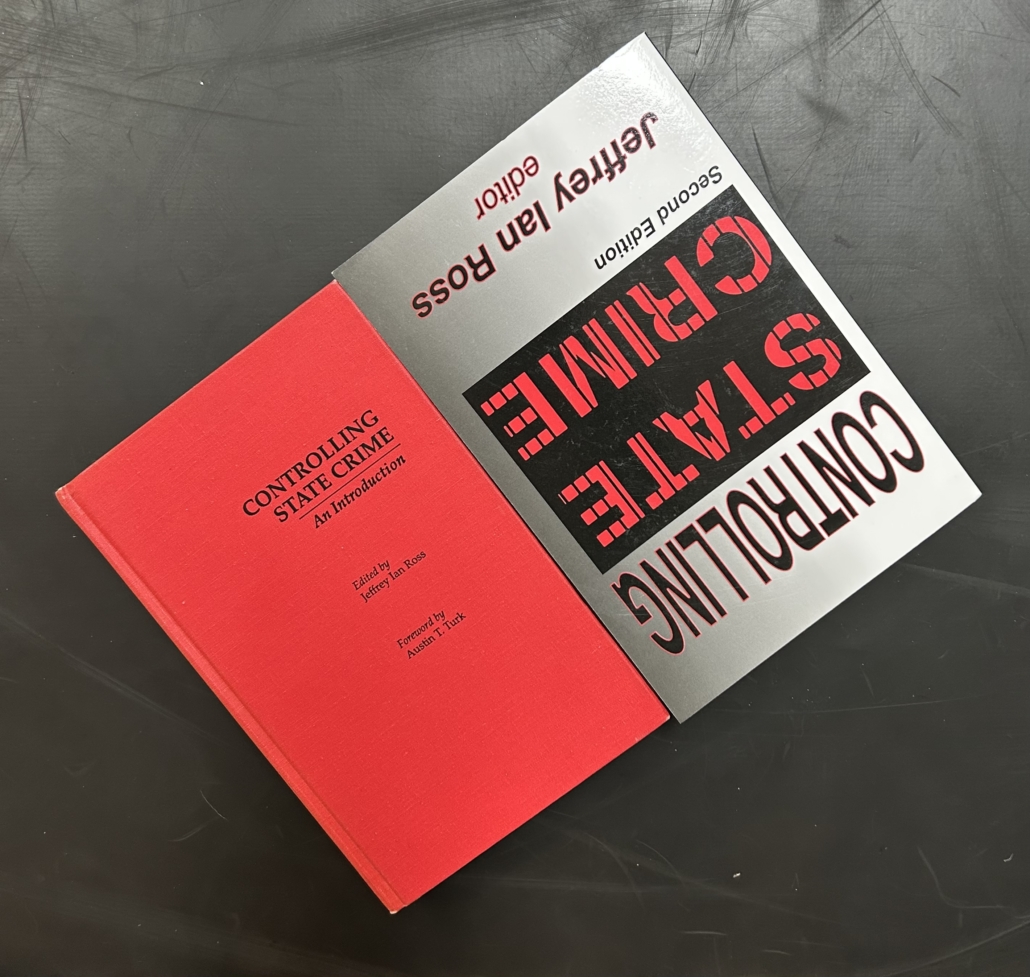
Reflections on the 30th Anniversary of CONTROLLING STATE CRIME
Three decades ago one of my first books, Controlling State Crime (1995) was published by Garland. This edited volume was, in part, a response to Gregg Barak’s Crimes of the Capitalist State (1991), an edited collection that brought together critical research on state crime. While Barak and his contributors effectively framed key debates on the topic, I felt their analysis did not pay sufficient attention to the challenge of control. Although identifying examples and the causes of state crime is important, I argued that the more pressing issue was how to deter, prevent, or minimize it. This concern further led me to edit a follow-up book, Varieties of State Crime and Its Control, (Criminal Justice Press, 2000) which examined concrete strategies for controlling state crime in advanced industrialized democracies.
The Accessibility Barrier in Academic Publishing
When Controlling State Crime was first released, it retailed for about $80.00, making it largely inaccessible to individual scholars and students. Despite numerous positive reviews, the high cost likely limited its readership. Recognizing this drawback, the second edition of the book was published by Transaction Publishers in 2000 as a paperback, with a new introduction, at a more affordable price. The experience reinforced a lesson some academic authors learn over time: accessibility and affordability are often just as critical as content in determining a book’s impact.
Control vs. Resistance: A Diverging Focus
Over the past few decades, a handful of criminologists have examined resistance to state crime. Although resistance plays an essential role in challenging state crime, it does not, in itself, constitute an effective control mechanism. Resistance often emerges in reaction to state crime, but meaningful control requires institutional mechanisms, enforcement strategies, and accountability measures that prevent these crimes from occurring in the first place. In short, resistance may disrupt state crime but does not ensure its deterrence or systemic reduction.
Revisiting the Core Question: How Do We Control State Crime and Crimes of the Powerful?
After stepping away from this line of scholarship for some time, I re-engaged when Gregg Barak edited The Routledge Handbook of the Crimes of the Powerful (2015). Moving the debate from state crimes to crimes of the powerful has been a significant conceptual development and reaffirmed my belief that the central challenge remains: How do we best control powerful actors? While academic perspectives on this issue have evolved, I continue to see control—not just resistance—as the more urgent issue to be understood and implemented.
Moving forward, we need to critically examine the effectiveness of existing informal and legal mechanisms, policy interventions, and enforcement structures. Have international legal frameworks such as the International Criminal Court deterred state crime? How has digital surveillance affected state accountability? What role do whistleblowers and the news media play in exposing and preventing state crime? These are the questions that continue to demand attention.
Thirty years after the publication of Controlling State Crime, the central problem it addressed remains unresolved. Although scholarly understanding of state crime and the crimes of the powerful has improved, effective and durable mechanisms for holding state actors accountable remain limited and uneven. Control, rather than resistance alone, continues to be the more difficult and more consequential challenge.